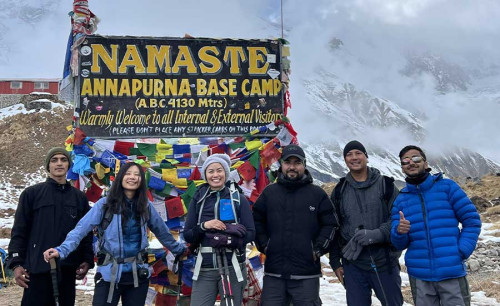
The Annapurna Circuit Trek with Himalayan Dream Team is one of the most rewarding adventures in Nepal. This legendary trekking route blends dramatic Himalayan landscapes, cultural diversity, and breathtaking mountain views. From lush valleys and traditional villages to high mountain passes and arid Mustang terrain, every step offers a new discovery. To enjoy this journey to the fullest, it is important to be well-prepared and informed in advance.
Annapurna Circuit Elevation
The Annapurna Circuit Trek features one of the most dramatic altitude ranges of any trek in Nepal. Our standard itinerary usually begins from Dharapani (1,860 m) and gradually ascends to the world-famous Thorong La Pass at 5,416 m.
From the high pass, the trail descends toward the Kali Gandaki Gorge and eventually reaches around 900 m near Pokhara. This elevation change of more than 3,500 meters is covered within 16–20 days, depending on the pace and acclimatization days included.
Proper acclimatization is crucial to avoid altitude sickness. We schedule rest days in Manang (3,540 m), where trekkers can explore Gangapurna Lake, local monasteries, and the stunning Manang Valley. For added adventure, side trips such as the Tilicho Lake Trek (4,920 m) can also be included for better acclimatization and unforgettable scenery.
Where is the Annapurna Circuit?
The Annapurna Circuit Trekking route is located in central Nepal within the Annapurna Conservation Area, home to some of the most spectacular Himalayan scenery. Just 60 km north of Pokhara, this circuit encircles the Annapurna massif, including Annapurna I (8,091 m).
The trek passes through four culturally rich regions—Lamjung, Manang, Mustang, and Myagdi—each offering unique landscapes and traditions. Starting in the lush Marshyangdi River Valley, the trail climbs to Thorong La Pass, the highest trekking pass in the world, before descending into the mystical Mustang region and the dramatic Kali Gandaki Gorge.
Along the way, trekkers witness a variety of landscapes: subtropical forests, terraced fields, alpine meadows, arid deserts, and snow-covered peaks.
Difficulty Level of Annapurna Circuit Trek
The Annapurna Circuit Trek difficulty is classified as moderate to challenging. The trek covers approximately 200 km over 16 days, with long walking hours and significant altitude gain.
The trail is well-maintained and ascents are generally gradual, but walking at high altitude requires stamina and determination. The major challenge is the climb to Thorong La Pass (5,416 m), which demands both physical fitness and proper acclimatization.
With good preparation and guidance from our professional team, the Annapurna Circuit is achievable for trekkers with average fitness levels. Mental resilience, steady pacing, and a carefully planned itinerary make the challenge both safe and rewarding.
Can Beginners Trek the Annapurna Circuit?
Yes, beginners can complete the Annapurna Circuit Trek, provided they are well-prepared. The trek involves long walking days and significant elevation gain, so prior hiking experience is helpful but not mandatory.
We recommend beginners to start a training plan at least two months before departure. This should include cardio exercises (running, cycling, swimming), strength training, stair climbing, and day hikes with a backpack. Combined with proper acclimatization days, even first-time trekkers can enjoy this incredible Himalayan journey.
Choosing an experienced company like Himalayan Dream Team ensures safety, comfort, and expert guidance throughout the trek.
Why is the Annapurna Circuit Trek Worth It?
The Annapurna Circuit is often considered one of the best treks in the world—and for good reason. This journey offers:
- Breathtaking panoramas of the Annapurna range, Dhaulagiri, Manaslu, and Machhapuchhre (Fishtail).
- Cultural immersion in traditional villages of Gurung, Manangi, and Thakali people.
- Visits to sacred sites like Muktinath Temple, Barga Monastery, and ancient gompas.
- Unique landscapes, from subtropical valleys to the arid Mustang desert.
- The thrill of crossing Thorong La Pass, the world’s highest trekking pass.
The Annapurna Circuit is more than just a trek—it’s an immersive Himalayan experience blending natural beauty, adventure, and culture.
Accommodation on the Annapurna Circuit
The popularity of the Annapurna region ensures a wide range of accommodation options, from simple teahouses to comfortable lodges.
At lower elevations (Dharapani, Chame, Pisang), trekkers can find guesthouses with attached bathrooms, hot showers, Wi-Fi, and private rooms. At higher altitudes, facilities become more basic, often offering shared rooms, traditional meals, and limited amenities.
Compared to other trekking routes in Nepal, accommodation on the Annapurna Circuit is relatively better developed, ensuring comfort even in remote locations.
Food on the Annapurna Circuit Trek
Nutrition is essential for trekking, and the Annapurna Circuit food options are both diverse and satisfying. Most teahouses serve Dal Bhat—the staple Nepali dish of rice, lentils, and vegetables—providing the energy needed for long days of hiking.
Other local favorites include Momos (dumplings), Thukpa (Tibetan noodle soup), and traditional Thakali meals. At lower elevations, trekkers can also enjoy Western options such as pasta, pizza, and pancakes. Vegetarian options are widely available, though we recommend avoiding meat at high altitudes for health reasons.
Best Time for Annapurna Circuit Trek
The best seasons for Annapurna Circuit Trekking are Autumn (September–November) and Spring (March–May). These months offer stable weather, clear skies, and excellent mountain visibility.
During spring, rhododendrons and wildflowers bloom across the hillsides, while autumn offers crisp air and ideal trekking temperatures. Winter treks are possible but require extra preparation for extreme cold. The monsoon season (June–August) is less ideal due to heavy rainfall, slippery trails, and limited views.
Annapurna Circuit Trek Distance
The Annapurna Circuit Trek distance is approximately 200 km. Our 15-day itinerary takes you from Bhulbhule to Jagat, Bagarchap, Chame, Pisang, Manang, Yak Kharka, Thorong Phedi, Thorong La Pass, Muktinath, and Jomsom, before flying to Pokhara.
Unlike many treks, the Annapurna Circuit is a loop, meaning you don’t retrace your steps. Each day brings fresh scenery and new experiences.
Annapurna Circuit vs Annapurna Base Camp
- Although both are in the Annapurna region, the Annapurna Circuit Trek and Annapurna Base Camp Trek offer different experiences.
- Annapurna Circuit: Longer (200 km), crosses high passes (5,416 m), includes Mustang, Manang, and cultural villages.
- Annapurna Base Camp: Shorter, focuses on the Annapurna Sanctuary at 4,130 m, more direct to the base of Annapurna I.
- Both treks are unforgettable, but the Annapurna Circuit offers more diversity in landscapes and cultures.
Annapurna Circuit Trek Permits
Two permits are required for the trek:
- Annapurna Conservation Area Permit (ACAP)
- Trekker’s Information Management System (TIMS)
These can be arranged easily in Kathmandu or Pokhara. When you book with Himalayan Dream Team, we take care of all permits and paperwork, ensuring a smooth start to your trek.
Packing List for Annapurna Circuit
Essential items include:
- Sturdy trekking boots
- Warm layered clothing (thermal, fleece, down jacket)
- Trekking poles
- Sleeping bag (–15°C recommended)
- Gloves, hats, sunglasses
- Reusable water bottle & purification tablets
- Basic toiletries and personal medications
A detailed packing list is provided once you confirm your booking with us.
Cost of Annapurna Circuit Trek
The Annapurna Circuit Trek cost depends on group size, season, and services. On average, prices range from USD 1,200 to 1,800 for 15 days, including accommodation, meals, permits, guide, porter, and ground/air transport.
Our Himalayan Dream Team package includes:
- Professional trekking guide and porters
- Accommodation and meals on the trek
- ACAP & TIMS permits
- All ground transportation
- Support with acclimatization and safety measures
This all-inclusive approach allows you to focus on the trek while we handle the logistics.