Find Your Tour

Manaslu and Tsum Valley Trek

Duration: 23 DaysActivities: Trekking in Nepal

Overview And Highlights

Trip Facts

Destination

Nepal

Group Size

2-15

Region

Manasalu / Gorkha

Activities

Hiking / Trekking

Culture

Gurung / Tibetan

Meals

included during the trek

Accommodation

Lodge / Tea House

Max Elevation

5106m / Larke Pass

Best Month

March - May and Sep - Dec

Trip Grade

Challenging

Trek Starts / Ends

MacchaKhola / Dharapani

Transportation

Private Vehicles

Duration

23 Days

Manaslu and Tsum Valley Trek Highlights:

  • Begin with a rich cultural tour of Kathmandu’s UNESCO World Heritage Sites.
  • Explore the sacred Tsum Valley home to Rachen Gompa, Mu Gompa, and Milarepa’s Cave.
  • Enjoy panoramic mountain views of Ganesh Himal, Sringi Himal, Himal Chuli and Boudha Himal.
  • Cross the challenging Larkya-La Pass (5,160 m) for breathtaking Himalayan vistas.
  • Immerse in the Tibetan-influenced lifestyle of the Nupri people and their timeless traditions.
  • Visit serene glacial lakes such as Birendra Tal and Pungkar Tal beneath snow-capped peaks.
  • Trek through remote stone villages adorned with chortens, mani walls, and fluttering prayer flags.
  • Experience spiritual tranquility at Gumba Lungdang and the chanting nuns’ evening puja.
  • Hike to Manaslu Base Camp and Ganesh Himal Base Camp for unmatched alpine scenery.
  • Conclude the journey with lush forest descents and the warm hospitality of Nepal’s highland communities.

Short Itinerary Manaslu and Tsum Valley Trek

DayDetails / RouteFoodAccommodationHighest AltitudeWalking Hours
Day 1Arrival in Kathmandu and transfer to the hotelDinnerHotel1,335 m
Day 2Sightseeing in Kathmandu Valley - UNESCO Heritage SitesBreakfastHotel1,335 m5–6 hrs
Day 3Drive from Kathmandu to MachhakholaBreakfast–Lunch–DinnerLodge930 m7–8 hrs
Day 4Trek from Machhakhola to JagatBreakfast–Lunch–DinnerLodge1,340 m6–7 hrs
Day 5Trek from Jagat to LokpaBreakfast–Lunch–DinnerLodge2,240 m6–7 hrs
Day 6Trek from Lokpa to ChumlingBreakfast–Lunch–DinnerLodge2,386 m4–5 hrs
Day 7Trek from Chumling to Chhokang ParoBreakfast–Lunch–DinnerLodge3,030 m6–7 hrs
Day 8Trek from Chhokang Paro to NileBreakfast–Lunch–DinnerLodge3,360 m5–6 hrs
Day 9Trek from Nile to Mu Gompa and return to Chhokang ParoBreakfast–Lunch–DinnerLodge4,000 m5–6 hrs
Day 10Trek from Chhokang Paro to Gumba LungdangBreakfast–Lunch–DinnerLodge2,485 m5–6 hrs
Day 11Day hike from to Ganesh Himal Base Camp and backBreakfast–Lunch–DinnerLodge4,500 m6–7 hrs
Day 12Trek from Gumba Lungdang to LokpaBreakfast–Lunch–DinnerLodge2,240 m6–7 hrs
Day 13Trek from Lokpa to GhapBreakfast–Lunch–DinnerLodge2,300 m7–8 hrs
Day 14Trek from Ghap to LhoBreakfast–Lunch–DinnerLodge3,180 m5–6 hrs
Day 15Trek from Lho to SamagaonBreakfast–Lunch–DinnerLodge3,520 m3–4 hrs
Day 16Acclimatization - Hike to Manaslu Base Camp and backBreakfast–Lunch–DinnerLodge4,400 m6–7 hrs
Day 17Trek from Samagaon to SamdoBreakfast–Lunch–DinnerLodge3,875 m3–4 hrs
Day 18Trek from Samdo to Dharamsala (Larkya Phedi)Breakfast–Lunch–DinnerLodge4,460 m3–4 hrs
Day 19Trek from Dharamsala to Bimthang via Larkya La Pass Breakfast–Lunch–DinnerLodge5,160 m7–8 hrs
Day 20Trek from Bimthang to DharapaniBreakfast–LunchLodge1,860 m6–7 hrs
Day 21Drive from Dharapani to KathmanduBreakfast–LunchHotel1,335 m7–8 hrs
Day 22Free Day or Optional Sightseeing: Boudhanath Stupa & BhaktapurBreakfastHotel1,335 m
Day 23Transfer to International Airport for Final DepartureBreakfastHotel

Manaslu And Tsum Valley Trek Route

SectionHighlightsCultural AspectsNatural Features
Drive from Kathmandu to Machha KholaScenic drive through hills and riverbanksTibetan-influenced villagesHills, rivers, forests
Trek through Jagat and LokpaBamboo, pine forests, and Budhi Gandaki RiverMani walls and prayer flagsTerraced farmlands and waterfalls
Explore Tsum Valley (Mu Gompa, Gumba Lungdang, Rui La Pass)Tibetan culture, monasteries, and mountain viewsMonasteries and spiritual Tibetan traditionsSnow-capped peaks, rhododendron forests
Rejoin Manaslu Circuit at DengNupri region with Tibetan influenceTibetan communities in NupriMountainous terrain with river views
Acclimatization at Samagaun and SamdoSide trips to Manaslu Base Camp and acclimatizationInteraction with monks and local Tibetan communitiesPanoramic views of Mt. Manaslu and Ganesh Himal
Trek to Larkya La PassChallenging but rewarding crossing of Larkya La PassHistorical importance of Larkya La PassHimalayan ranges and icefalls
Descent to DharapaniOption to return to Kathmandu or continue to PokharaTibetan-influenced hospitalityDescending into greener landscapes

tsum valley trek manaslu region


    Day to Day Itinerary

    Food/Meals

    Dinner

    Accommodation

    Hotel

    Max Elevation

    1335 m.

    1st Day- Manaslu and Tsum Valley Trek

    Arrival in Kathmandu and transfer to the hotel Welcome to Nepal! A Himalayan Dream Team representative will welcome you with a Nepali flower at Tribhuvan International Airport in Kathmandu and facilitate your private transfer to the hotel. You can relax and recover from your journey at the hotel and, when you feel ready, enjoy a gentle stroll around the neighborhood to get your first taste of the city. As an introduction to your journey, we would like to treat you to dinner at one of best restaurant, which is guaranteed to give you the best impression of authentic local cuisine and hospitality.

    Food/Meals

    Breakfast

    Accommodation

    Hotel

    Max Elevation

    1335 m.

    2nd Day- Manaslu and Tsum Valley Trek

    Sightseeing in Kathmandu Valley - UNESCO Heritage Sites Following your breakfast at the hotel, your guide will take you on a full day exploration of the profound cultural and spiritual heritage of Kathmandu, taking you to multiple UNESCO world heritage sites.

    Swayambhunath (Monkey Temple): You will start the day at this lofty Buddhist stupa resting on a hill with its eye catching views of the entire Kathmandu Valley. This site is one of the oldest by gaining importance as a religious center in Nepal where it is worshiped by Buddhists and Hindus.

    Pashupatinath Temple: You will then proceed to Nepal’s most revered Hindu temple complex located on the banks of Bagmati River. Here, you will observe traditional cremation services and you will see sadhus (Hindu religious hermits) practicing their spirituality.

    Kathmandu Durbar Square: You can take a walk at the serene old royal palace region of historic Kathmandu after lunch. This square is a living exposition of older temples and courtyards along with houses sculptured and wooden buildings in newari style architecture. Local Markets Visit: To end the day, you can roam around kathmandu spice and vegetable markets which will allow you to experience the daily life of Kathmandan locals and provide opportunities for street photography.

    Food/Meals

    Breakfast-Lunch- Dinner

    Accommodation

    Lodge

    Max Elevation

    930 m.

    3rd Day- Manaslu and Tsum Valley Trek

    After breakfast, begin your scenic drive westward toward Machhakhola, the starting point of your trek.
    The journey follows the Trishuli River, offering stunning mountain and river valley views. The road becomes more rustic and adventurous beyond Dhading, passing through terraced fields, local villages, and dense forests with occasional glimpses of Ganesh Himal and Manaslu peaks.

    Upon reaching Machhakhola, a charming Gurung settlement along the Budhi Gandaki River, check in to your lodge and relax. Enjoy a warm meal while soaking in the peaceful atmosphere of rural Nepal.

    Food/Meals

    Breakfast-Lunch- Dinner

    Accommodation

    Lodge

    Max Elevation

    1340 m.

    4th Day- Manaslu and Tsum Valley Trek

    Your trek begins with a series of gentle ups and downs following the Budhi Gandaki River.
    You’ll pass through Khorlabesi, a beautiful Gurung village, and reach Tatopani, where you can rest and enjoy the natural hot springs — a soothing experience for your muscles.

    Continue trekking through Dobhan and cross several suspension bridges before reaching Yaru Bagar, where you’ll walk across the impressive Swiss-built Cantilever Bridge (constructed after the 2015 earthquake).

    The trail continues on the western bank of the Budhi Gandaki River before ascending to Jagat, a charming stone-built village marking the official entry point to the Manaslu Conservation Area.
    Here, your permits will be checked at the local checkpoint. Overnight at a comfortable teahouse.

    Food/Meals

    Breakfast-Lunch- Dinner

    Accommodation

    Lodge

    Max Elevation

    2240 m.

    5th Day- Manaslu and Tsum Valley Trek

    After breakfast, the trail enters the restricted region of Manaslu and Tsum Valley. Leaving the Gurung village of Jagat, you walk along the Budhi Gandaki River, passing Salleri, Sirdibas, and Philim, where you register your trekking permits.

    The path ascends to Salleri for fine views of Mt. Sringi Himal (7,161 m), then crosses one of Nepal’s longest suspension bridges to reach Sirdibas and Philim. Continuing through Ekle Bhatti and pine forest, you reach a junction left for Manaslu Circuit and right for Tsum Valley.

    A final climb brings you to Lokpa Village, the entry to the hidden valley, offering wonderful views of Himalchuli and Boudha Himal.

    Food/Meals

    Breakfast-Lunch- Dinner

    Accommodation

    Lodge

    Max Elevation

    2386 m.

    6th Day- Manaslu and Tsum Valley Trek

    Today’s trail descends through peaceful rhododendron and pine forest, crosses a stream, and climbs steeply to Bhatti Ghumlong and Ripchet Village. After crossing the Siyar Khola on a wooden bridge, a gradual ascent leads to Chumling, the first village of the Tsum Valley.

    The path offers occasional views of Ganesh Himal, and Chumling itself features stone houses, mani walls, and monasteries such as Panago Gumba, Mani Dhungyur, and Gurwa Gumba. A large Chorten in the fields completes this serene Himalayan setting.

    Food/Meals

    Breakfast-Lunch- Dinner

    Accommodation

    Lodge

    Max Elevation

    3030 m.

    7th Day- Manaslu and Tsum Valley Trek

    Leaving Chumling, the trail enters the heart of Tsum Valley, where ancient Buddhist culture comes alive. You walk past beautifully crafted mani walls and chortens, carved with sacred prayers and deities, reflecting the spiritual depth of this region. After crossing a suspension bridge, the route winds through fertile farmlands of maize and potatoes, with traditional Tibetan-style houses along the way.

    The trail climbs steadily, passing through landslides that reshaped the valley decades ago but are now re-covered by forest. Views of Ganesh Himal (7,000m) dominate the horizon, with glimpses of Ripchet village perched high above the valley. After a simple lunch stop at Rainjam, you cross the Serpu Khola and continue on a gradual but steady climb. The day ends at Chhokang Paro, one of the largest villages in the Upper Tsum Valley, surrounded by expansive barley and buckwheat fields. On clear evenings, Himalchuli (7,893m) shines brilliantly down the valley.

    Food/Meals

    Breakfast-Lunch- Dinner

    Accommodation

    Lodge

    Max Elevation

    3360 m.

    8th Day- Manaslu and Tsum Valley Trek

    Today’s trek is shorter but significant as you continue to gain altitude. Take time in the morning to explore the twin villages of Chhokang and Paro, and if you wish, visit the meditation site of Lama Kongchog, the revered monk whose reincarnation story inspired the documentary Unmistaken Child.

    Heading north, the trail passes through fertile fields and small hamlets before reaching Rachen Gompa (3,240m), a large nunnery considered the female counterpart of Kopan Monastery in Kathmandu. The valley here widens, and you visit Milarepa’s Cave (Piren Phu), where the legendary Tibetan saint is believed to have meditated. Continuing further, you pass through the villages of Phurbe and Pangdun, with their distinct mani walls and an unusual round stupa.

    Crossing the Shiar Khola, the trail climbs gradually to Chhule, marked by a traditional kani (village gate), and then continues upstream to reach Nile (Nyile). This village, together with Chhule, is the last permanent settlement heading north towards Mu Gompa. Houses are built in traditional style, often with attached livestock shelters and wide verandas for drying crops.

    Food/Meals

    Breakfast-Lunch- Dinner

    Accommodation

    Lodge

    Max Elevation

    4000 m.

    9th Day - Manaslu and Tsum Valley Trek

    Today is one of the highlights of the Tsum Valley Trek. With just a light day pack, you leave your main rucksack behind and start early, following the west bank of the Shiar Khola. The morning is magical, with yaks being herded to pasture and sunlight streaming into the narrowing valley.

    After a steady climb past rows of chortens, you arrive at Mu Gompa (3,700m), the largest monastery in Tsum Valley, home to more than 100 monks. This centuries-old gompa is a center of Buddhist learning and meditation, with stunning views of the surrounding Tibetan borderlands. If time permits, you can also make a side visit to Dhephyudoma Gompa (4,000m), a secluded retreat. Panoramas of high passes towards Tibet and seasonal yak pastures stretch in all directions.

    On your way back, descend through Chhule and stop at Rachen Gompa (3,240m), an ancient nunnery still active today. The trail then follows the river south until you cross back to the west bank and return to Chhokang Paro.

    Food/Meals

    Breakfast-Lunch- Dinner

    Accommodation

    Lodge

    Max Elevation

    2485 m.

    10th Day - Manaslu and Tsum Valley Trek
    Leaving Chhokang Paro, the trail drops steadily for about two hours to reach Gho (2,485m), a small village with a modest monastery. You continue descending to cross a wooden bridge over the Shiar Khola, arriving at Dumje (2,440m), where a Tibetan herbal clinic and school are located.

    From here, the route climbs steeply behind the village through pine and rhododendron forest. The trail is narrow and exposed in sections, marked by mani walls draped with prayer flags. After a demanding zigzag ascent through silver pines, you finally reach Gumba Lungdang (3,200m), a remote monastery perched high on a ridge. Around 40 nuns live here, and their evening puja (chanting ceremony) is one of the most moving cultural experiences of the trek. The monastery also offers breathtaking mountain views in every direction.

    Food/Meals

    Breakfast-Lunch- Dinner

    Accommodation

    Lodge

    Max Elevation

    4500 m.

    11th Day- Manaslu and Tsum Valley Trek
    Today you set out on a challenging but rewarding hike to Ganesh Himal Base Camp (4,500m). Starting from the monastery, the trail descends briefly before climbing steeply through pristine forest of pine, birch, and rhododendron. After crossing the Laudang Khola on a wooden bridge, you ascend a ridge with seasonal yak pastures and scattered huts.

    The path eventually reaches grassy flats below the Toro Gompa Glacier, with dramatic views of the surrounding cirque of peaks. The final push to base camp rewards you with one of the most spectacular panoramas in the Himalayas, showcasing the massive Ganesh Himal range in all its glory. After enjoying the scenery and a packed lunch, you return to Gumba Lungdang in time for the evening puja.

    Food/Meals

    Breakfast-Lunch- Dinner

    Accommodation

    Lodge

    Max Elevation

    2240 m.

    12th Day- Manaslu and Tsum Valley Trek
    Today’s trek is long and varied as you begin your journey back down the valley. Descend first to Dumje, then cross the Laudang Khola to follow the southern bank of the Shiar Khola. The trail crosses several dramatic gorges on wooden and cantilever bridges before climbing to the beautiful village of Ripchet (2,470m), a fertile terrace of barley and buckwheat fields with ancient chortens.

    From here, a steep descent leads to Ghumlong (2,130m) by the river, before another climb through pristine temperate forest takes you back to Lokpa (2,240m). This is where the Tsum Valley trail reconnects with the main Manaslu Circuit route.

    Food/Meals

    Breakfast-Lunch- Dinner

    Accommodation

    Lodge

    Max Elevation

    2300 m.

    13th Day – Manaslu and Tsum Valley Trek

    After breakfast, you cross a suspension bridge over the Budhi Gandaki River and continue toward Nyak village. The trail gradually climbs through deep gorges, crossing several bridges and mani walls before reaching the Gurung village of Deng. Enjoy magnificent views of Mt. Sringi Himal (7,161 m) along the way.

    From Deng, the route follows a series of short ascents and descents through lush forest and small settlements, finally reaching Ghap, a charming village surrounded by terraced fields and traditional stone houses.

    Food/Meals

    Breakfast-Lunch- Dinner

    Accommodation

    Lodge

    Max Elevation

    3180 m.

    14th Day – Manaslu and Tsum Valley Trek

    The trail climbs gradually through forests of fir, rhododendron, and oak, crossing mani walls and chortens along the way. Passing the pretty villages of Lihi and Sho, you’ll be rewarded with wonderful views of Manaslu (8,163 m), Himal Chuli (7,893 m), and Ngadi Chuli (7,971 m).

    A gentle ascent brings you to Lho, a picturesque village dominated by Ribung Gompa and offering stunning sunset and sunrise views over Manaslu.

    Food/Meals

    Breakfast-Lunch- Dinner

    Accommodation

    Lodge

    Max Elevation

    3520 m.

    15th Day – Manaslu and Tsum Valley Trek

    Today’s short and pleasant walk follows the Budhi Gandaki River, passing through alpine meadows, mani walls, and small monasteries. You reach Shyala, surrounded by Himalayan giants — Manaslu, Himal Chuli, and Peak 29.

    Crossing a wooden bridge over the Numla Khola, the trail gently descends to Samagaon, one of the most beautiful villages in the region. Explore the Pema Chyoling Monastery and enjoy magnificent views of Manaslu, Naike Peak, and Larkya Peak.

    Food/Meals

    Breakfast-Lunch- Dinner

    Accommodation

    Lodge

    Max Elevation

    4400 m.

    16th Day – Manaslu and Tsum Valley Trek

    A full day for acclimatization and exploration. After breakfast, you can visit Birendra Lake or Anie Gompa, before hiking up to Manaslu Base Camp (4,400 m). From here, enjoy breathtaking views of Mt. Manaslu (8,163 m) and the surrounding glaciers.

    After spending time at base camp, return to Samagaon for a relaxed evening.

    Food/Meals

    Breakfast-Lunch- Dinner

    Accommodation

    Lodge

    Max Elevation

    3875 m.

    17th Day – Manaslu and Tsum Valley Trek

    Descend along the Budhi Gandaki River and follow a gentle trail through juniper and birch forests. The path gradually climbs past Kermo Kharka, crossing the river on a wooden bridge before reaching the charming settlement of Samdo (3,875 m).

    Enjoy spectacular views of Samdo Peak (6,335 m), the Syacha Glacier, and the surrounding Himalayan landscape.

    Food/Meals

    Breakfast-Lunch- Dinner

    Accommodation

    Lodge

    Max Elevation

    4460 m.

    18th Day – Manaslu and Tsum Valley Trek

    Leaving Samdo, the trail crosses the fields toward Budhi Gandaki River for the final time at Larkya Bazaar. You then climb steadily through barren, rocky terrain above the Syacha Glacier.

    Arrive at Dharamsala (Larkya Phedi), the base for tomorrow’s pass crossing, where you can enjoy panoramic views of Larkya Peak (6,249 m) and Naike Peak (6,211 m).

    Food/Meals

    Breakfast-Lunch- Dinner

    Accommodation

    Lodge

    Max Elevation

    5160 m.

    19th Day – Manaslu and Tsum Valley Trek

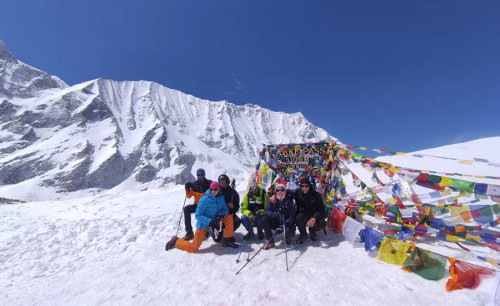
    Today is one of the most rewarding days of the trek. Starting early, ascend gradually to the Larkya Glacier and follow the moraine to reach the Larkya La Pass (5,160 m) - the highest point of the journey.

    From the top, enjoy a breathtaking panorama of Cheo Himal (6,812 m), Himlung (7,126 m), Gyaji Kung (7,030 m), Kangguru (6,981 m), and Annapurna II (7,937 m).

    Descend through moraine and snowfields to Dangboche Kharka, then follow the trail into the beautiful Bimthang Valley, surrounded by glaciers and pine forests.

    Food/Meals

    Breakfast-Lunch

    Accommodation

    Lodge

    Max Elevation

    1860 m.

    20th Day – Manaslu and Tsum Valley Trek

    After breakfast, descend through pine and rhododendron forest, crossing the Dudh Khola River and passing Hompuk and Sangure Kharka. Continue down to Kharche and Tilje, then follow the Marsyangdi Valley trail to Dharapani, reconnecting with the Annapurna Circuit route.

    Food/Meals

    Breakfast-Lunch

    Accommodation

    Hotel

    Max Elevation

    1335 m.

    21st Day – Manaslu and Tsum Valley Trek

    After breakfast, bid farewell to your trekking team and start the scenic drive back to Kathmandu. The journey passes through Besisahar and continues along the Prithvi Highway, with beautiful views of terraced fields, rivers, and green hills.

    Upon arrival in Kathmandu, transfer to your hotel for a well-deserved rest. In the evening, you can celebrate your successful trek with a farewell dinner or relax at your leisure.


    Food/Meals

    Breakfast

    Accommodation

    Hotel

    Max Elevation

    1335 m.

    22st Day – Manaslu and Tsum Valley Trek

    After breakfast, you have a full free day to relax OR explore more of the Kathmandu Valley’s rich cultural heritage. For those interested, we recommend an optional sightseeing tour to two of Nepal’s most iconic UNESCO World Heritage Sites; Boudhanath Stupa and Bhaktapur.

    Morning - Boudhnath Stupa, A Center of Peace and Spirituality

    To start the day, you’ll go to the Budhhanath Stupa, one of the biggest and most sacred stupas in the world. As you approach the large white dome structure, notice the golden buddha eyes on the dome looking down on you, and notice the peace it brings. Take time to meditate, and join the devotees for a few minutes to walk around the stupa and participate in prayer and spiritual activities.

    After the stupa, you can head to one of the vibrant and lively monasteries and participate in ritals,  You can watch the monks and pilgrims and the relaxing and serene environment that they bring to the place, as they perform their rituals.

    Afternoon – Bhaktapur: The Living Heritage of Nepal

    After completing your visit to Boudhanath, drive to Bhaktapur, where you will first enjoy lunch at a traditional Newari restaurant before beginning your exploration of this beautifully preserved medieval city.

    Bhaktapur’s brick-paved streets, ornate temples, and open courtyards transport you back in time to the days of the Malla kings.

    • Bhaktapur Durbar Square: Wander through this historic palace complex surrounded by pagoda-style temples and intricate stone sculptures.
    • 55-Window Palace: Admire the fine woodcarvings and elegant craftsmanship of this architectural masterpiece.
    • Golden Gate and Lion Gate: Two iconic entrances that showcase remarkable examples of traditional metal and stone art.
    • Pottery Square: Watch local artisans skillfully shaping clay on traditional wheels, keeping alive the centuries-old pottery tradition that defines Bhaktapur’s charm.

    Sightseeing will end in the late afternoon and you will go back to Kathmandu. Depending on time, you can take a walk in Thamel for a beautiful evening and do last minute souvenir shopping. It is a busy area with many shops, cafes and lovely streets.


    Food/Meals

    Breakfast

    Max Elevation

    0 m.

    23rd  Day- Manaslu and Tsum Valley Trek

    After breakfast or lunch, depending on your flight time, we will transfer you to the international airport or if you leave by evening you can put your luggage at the Hotel and enjoy the city one final day.

    If you're interested in extending your stay in Nepal, you might want to consider pre-booking a day's sightseeing tour in the Kathmandu Valley or a multi-day excursion to the wildlife reserve at Chitwan. For further information, please don't hesitate to reach out to our office.

    Services Included on Price

    Service Includes

    • Arrival and transfer from and to the international airport
    • 4 nights hotel in Kathmandu (4-star category) twin sharing room on a bed and breakfast plan.
    • Authentic Nepali-style welcome dinner upon arrival in Kathmandu.
    • Cultural guide and private transport during sightseeing in Kathmandu.
    • Monument entrance fees during sightseeing in Kathmandu.
    • All standard meals during the trek (Breakfast, Lunch, and Dinner), including one cup of tea or coffee with each meal
    • Seasonal fruits served after dinner each day
    • Accommodation in lodges/tea houses throughout the trek
    • Services of an experienced, first-aid trained, government-licensed, English-speaking trekking guide
    • 1 assistant guide for groups larger than 6 persons
    • Porters for luggage carrying (1 porter for every 2 clients)
    • All necessary paperwork and trekking permits (ACAP, MCAP, and special permit for Manaslu)
    • Ground transportation as per the itinerary, provided by private vehicles
    • Wages, accommodation, meals, gear, insurance, and medications for all staff
    • Emergency arrangements such as helicopter evacuation (to be covered by your travel insurance)
    • All administrative expenses and government taxes

    Service Excludes

    • International flights (from and to Kathmandu).
    • Accommodation and meals in Kathmandu before and after the trek
    • Nepal entry visa (USD 50 for a 30-day visa, easily obtained upon arrival at the Kathmandu airport)
    • Travel and rescue insurance (ensure your insurance covers emergency evacuation from the mountains)
    • Personal expenses, such as souvenirs and snacks
    • Alcoholic and non-alcoholic beverages, including hot and cold drinks
    • Tips for staff (Driver, Guide, and Porter)
    • Extra costs due to unforeseen changes in the itinerary (e.g., weather delays)
    • Laundry, telephone bills, and personal trekking equipment
    • Any other expenses not mentioned in the "Cost Includes" section

    Altitude Graph

    Route Map

    Manaslu and Tsum Valley Trek route map

    Frequently Asked Questions for Manaslu and Tsum Valley Trek

    General Information

    The best times to trek to Everest Base Camp are during the pre-monsoon season (March to May) and the post-monsoon season (late September to November). These periods offer clearer skies and more stable weather.
     

    Essential items include warm clothing, waterproof jacket and pants, good quality hiking boots, sleeping bag, sunglasses, sunscreen, water purification tablets, and a first aid kit.

    Accommodations are primarily in teahouses which provide basic lodging and meals. Rooms are typically shared with basic facilities.

    On average, trekkers walk about 5 to 7 hours per day, depending on the stage of the trek and individual pace.

    The risk is minimal. The region is home to wildlife like the Himalayan Tahr and various birds, but they generally keep their distance from trekking paths.

    Health & Safety

    The trek usually takes about 12 to 14 days, starting from Lukla. This includes time for acclimatization stops to adjust to the high altitude.

    A moderate to high level of fitness is required. The trek involves long days of walking, often on steep and rough terrain. Preparing with cardiovascular training and strength exercises is advisable.

    Symptoms include headache, nausea, dizziness, and tiredness. Prevention involves acclimatizing properly by ascending slowly, staying hydrated, and possibly using altitude sickness medication under a doctor's advice.


    Yes, most teahouses have Wi-Fi available for a charge. Mobile reception is available in many parts of the trek but can be unreliable as you gain altitude.

    Yes, travel insurance that covers emergency evacuation and medical expenses at high altitudes is strongly recommended due to the remote nature and risks involved in the trek.

    Permits & Logistics

    It is highly recommended to have a guide, especially for first-time trekkers. Guides offer valuable insights into the local culture, ensure safety, and help with route navigation and potential altitude sickness.

    Yes, you will need a TIMS card (Trekker's Information Management System) and a Sagarmatha National Park permit. These can usually be arranged by your trekking company.

    Payment & Cost

    The cost can vary widely depending on the trekking agency, the length of the trek, included amenities, and whether you hire a private guide and porter. Expect to spend between $1,000 and $3,000.

    Yes, most teahouses offer charging facilities for a small fee. However, it's a good idea to bring extra batteries or a solar charger, as electricity can be unreliable.

    Accommodation & Meals


    The teahouses offer a variety of meals, predominantly local Nepali food like dal bhat (rice and lentils) as well as some western dishes such as pasta and pizza.

    Additional Information

    To ensure your safety and a smooth experience, trekking independently in the Manaslu region, including the Tsum Valley, is not allowed. This area is one of Nepal's most remote and isolated, requiring special permits and careful organization. While independent trekking is possible in regions like Annapurna, Langtang and Everest, the Manaslu region has stricter regulations.

    For the Manaslu Circuit and Tsum Valley Trek, you must arrange your journey through a licensed Nepalese tour operator and be accompanied by an experienced guide. In addition, trekkers are required to be in a group of at least two people to obtain the necessary restricted area permits. Organizing the trek properly ensures you are well-prepared to handle both the challenges and rewards of this exceptional Himalayan adventure.

    Best Time for Manaslu Circuit Tsum Valley Trek:

    Best Season for the Manaslu and Tsum Valley Trek

    The best time to experience the Manaslu and Tsum Valley Trek is during spring (March to May) and autumn (September to November). These seasons offer the most stable weather, pleasant temperatures, and crystal-clear Himalayan views. Both periods provide ideal conditions for walking, photography, and cultural interaction along the trail.

    Spring (March – May)

    Advantages:

    • Days are warm and bright with excellent visibility.
    • The trails come alive with blooming rhododendrons and lush greenery.
    • Fewer trekkers than autumn, creating a quieter and more peaceful atmosphere.
    • Teahouses reopen after winter, offering renewed hospitality and energy in the villages.

    Things to Keep in Mind:

    • Early March can still bring patches of snow at higher altitudes.
    • Temperatures at night can be quite cold, especially above 3,500 m.

    Autumn (September – November)

    Advantages:

    • The most popular trekking season, with stable weather and clear skies after the monsoon.
    • Breathtaking views of Mount Manaslu, Himalchuli, and Ganesh Himal.
    • Villages are vibrant with local harvests and major festivals like Dashain and Tihar, giving you a deeper cultural experience.

    Things to Keep in Mind:

    • Trails and teahouses can be busier during late October and early November.
    • Nights and mornings become chilly at higher altitudes toward the end of the season.

    Other Seasons

    Winter (December – February):

    The region becomes extremely cold with snow-covered passes. Some teahouses may close temporarily, making travel challenging.

    Monsoon (June – August): Heavy rain, leeches, and slippery trails make this a difficult time to trek, though the landscapes are beautifully green and less crowded.

    In summary: Both spring and autumn offer an excellent opportunity to connect with local traditions and festivals, making the trek not only scenic but also culturally enriching. Whether you prefer the vibrant spring blossoms or the clear autumn skies with grand Himalayan views, each season provides its own special experience.

    For those wishing to explore more, other remarkable adventures include the Everest Base Camp Trek, Kanchenjunga Circuit Trek and Annapurna Circuit Trek, each offering a different perspective of Nepal’s majestic mountains and diverse cultures.

    The Manaslu Circuit and Tsum Valley Trek, particularly at Larkya La Pass (5,165m), presents a significant risk of altitude sickness due to its high elevation. The cold, snowbound conditions at this altitude increase the likelihood of symptoms. It's essential to properly acclimatize for a few days before tackling the pass. Skipping acclimatization can be dangerous, so it’s highly recommended to plan for extra rest days and stay alert to any signs of altitude sickness. Always inform your guide immediately if you experience any symptoms to ensure your safety.

    The trek combines stunning landscapes with cultural richness, offering a journey through remote villages, ancient monasteries, and pristine wilderness. You'll pass through diverse ecosystems, from lush forests to snow-covered mountain passes, with incredible views of peaks like Mt. Manaslu, Ganesh Himal, and Larkya Peak. The trail also provides opportunities to explore Tibetan culture in isolated Gurung and Tibetan villages, as well as spiritual landmarks like Milarepa's Cave.

    This adventure offers an off-the-beaten-path experience for trekkers seeking both physical challenge and cultural immersion. The combination of Tsum Valley and the Manaslu Circuit takes you into one of Nepal’s most remote regions, where the beauty of the rugged landscapes and the peaceful isolation of the valley create a truly unforgettable trek.

    Manaslu Circuit and Tsum Valley Trek Packing List:

    Clothing:

    • Moisture-wicking base layers: thermal tops and bottoms
    • Insulating mid-layers: fleece jacket or light down jacket
    • Down or insulated jacket (heavyweight): essential for evenings and high altitudes (Larkya-La area)
    • Waterproof and windproof outer layer: jacket and pants
    • Lightweight trekking pants and shirts for daytime walks
    • Warm hat and gloves: thermal or wool
    • Thermal inner gloves: to layer under outer gloves for extra warmth
    • Neck gaiter / buff / scarf: protects from dust, wind, and cold
    • Sun hat or cap for daytime sun protection
    • Comfortable trekking boots: well-broken in before the trek
    • Trekking socks: wool or synthetic (carry 4–5 pairs total for rotation)
    • Gaiters: protect against snow, dust, and mud
    • Comfortable evening wear / camp shoes or sandals for rest at teahouses
    • Sports bra (for women trekkers): comfortable for long trekking days

    Trekking Gear:

    • Trekking poles: collapsible and adjustable for balance on steep terrain
    • Daypack (20–30 liters) with rain cover: for personal essentials during the day
    • Duffel bag or large backpack: carried by porter for main luggage
    • Sleeping bag (–10°C or lower rating): suitable for cold nights in high altitude areas
    • Sleeping bag liner: adds warmth and keeps your sleeping bag clean
    • Headlamp with spare batteries: essential for early starts or evening use
    • Rain poncho or waterproof backpack cover: useful during spring or autumn showers
    • Microspikes or light crampons (optional): helpful for crossing Larkya-La Pass if icy or snowy
    • Map or offline navigation app (Maps.me / AllTrails): helpful even when trekking with a guide
    • Reusable dry bags or zip-locks: keep clothes, documents, and electronics dry
    • Thermos flask: ideal for keeping tea or hot water warm at higher elevations

    Personal Items:

    • Water bottle or hydration system (at least 2 liters): stay hydrated during long trekking days
    • Water purification tablets or filter: essential for safe drinking water in remote areas
    • Electrolyte powder or rehydration salts: replace minerals lost through sweat
    • High SPF sunscreen and lip balm: protect from strong UV rays at high altitude
    • Sunglasses with UV protection: prevent snow glare and sunburned eyes
    • Personal first aid kit: include blister plasters, bandages, and any prescribed medication
    • Pain relief or altitude medication: such as ibuprofen or Diamox (only as prescribed)
    • Quick-dry towel: for general use
    • Lightweight trekking towel: compact and fast-drying
    • Toiletries: biodegradable soap, toothbrush, toothpaste, and other small essentials
    • Wet wipes and hand sanitizer: for hygiene when water is limited
    • Nail clippers and small scissors: useful and often overlooked items
    • Lightweight flip-flops: for showers or relaxing at teahouses in the evenings

    Documents & Essentials:

    • Trekking permits: Manaslu Restricted Area Permit, Tsum Valley Permit, MCAP, and ACAP
    • Passport and extra passport-size photos: required for permits and checkpoints
    • Copies of flight tickets and travel itinerary: useful for hotels, agencies, and permit verification
    • Travel insurance (high-altitude coverage): mandatory for the Manaslu region; ensure it includes emergency helicopter evacuation
    • Printed copy of your insurance policy: often requested at permit and checkpoint offices
    • Emergency contact numbers: include your insurance provider, trekking agency, and embassy contacts
    • Cash in Nepalese Rupees: for teahouses, hot showers, charging, and small local purchases (ATMs are not available in remote areas)


    Manaslu Circuit and Tsum Valley Trek Difficulty: 

    The Manaslu Circuit and Tsum Valley Trek is considered a moderate to challenging adventure, ideal for trekkers seeking both physical endurance and cultural immersion in one of Nepal’s most remote regions. While it does not require technical climbing skills, the combination of long walking days, steep ascents and descents, high altitude, and basic facilities makes it a demanding trek suitable for well-prepared trekkers.

    Main Difficulty Factors

    • High Altitude: The trek reaches up to approximately 5,160 meters at the Larkya-La Pass, where oxygen levels are significantly lower. Acclimatization days are crucial to prevent altitude sickness.
    • Long Walking Hours: Expect to walk 5 to 8 hours daily, often on uneven terrain, stone steps, and narrow mountain paths.
    • Remote Terrain: The trail passes through secluded valleys, dense forests, suspension bridges, and glacial moraines. Many sections remain untouched by modern infrastructure, adding to both the beauty and difficulty.
    • Limited Facilities: Lodges and teahouses are simpler than in the Annapurna or Everest regions, especially around the higher sections and in the Tsum Valley. Basic meals and shared rooms are the norm.
    • Weather Challenges: Conditions can change quickly at altitude. The Larkya-La Pass is often windy and cold, particularly in late autumn and early spring.

    Who Can Join the Trek

    This trek is suitable for trekkers who:

    - Have a good level of physical fitness and stamina.
    - Can walk long distances on rugged trails carrying a light backpack.
    - Have some prior multi-day trekking experience (though not mandatory).
    - Are mentally prepared for rustic accommodation and remote conditions.

    Overall Assessment

    The Manaslu and Tsum Valley Trek is more demanding than popular routes like the Annapurna Circuit or Everest Base Camp due to its remoteness and high-altitude terrain. However, with proper preparation, gradual acclimatization, and guidance from experienced trekking leaders, it is a highly rewarding journey offering spectacular mountain views, authentic Himalayan culture, and a deep sense of accomplishment upon completing the crossing of Larkya-La Pass.


    Client Reviews

    Book Now Inquiry

    Similar Packages

    Enjoy the popular trekking and tour packages in Nepal Himalayas. 2026.