Find Your Tour

Langtang Valley Trek - 10 Days

Duration: 10 DaysActivities: Trekking in Nepal

Overview And Highlights

Trip Facts

Destination

Langtang Valley, Nepal

Group Size

2-12

Region

Langtang National Park, Northern Nepal

Activities

Trekking, Cultural Tour, Nature Walks

Culture

Tamang & Tibetan Buddhist Culture

Meals

Full board during trek; breakfast in Kathmandu

Accommodation

Hotels in Kathmandu, Teahouses during trek

Max Elevation

4,984 m (Tserko Ri)

Best Month

March???May & September???November

Trip Grade

Moderate (Beginner-friendly)

Trek Starts / Ends

Kathmandu ??? Syabrubesi ??? Langtang Valley ??? Kathmandu

Transportation

Private Tourist Vehicle (Kathmandu???Syabrubesi???Kathmandu)

Duration

10 Days

Langtang Valley Trek - 10 Days Trip Highlights:

  • Begin with an effortless and picturesque 7 hour drive from Kathmandu to Syabrubesh, with no flights necessary.  
  • Marvel in the Himalayan views of Langtang Lirung, Ganjala, Langsisa and Dorje Lakpa.  
  • Experience the panoramic views of Langtang Himalayas during the stunning sunrise hike towards Tserko Ri, set at 4,985m.  
  • Taste yak cheese from local producers in Kyanjin Gompa and watch them make it right in front of your eyes!  
  • Visit ancient and historic Buddhist monasteries located throughout the Langtang valley.  
  • Stake through the astonishing Langtang National Park which features a plethora of plants and animals like red panda and Danphe.  
  • Experience the real cultural lifestyle of Tamang and Tibetan Buddhists in the typical mountainous villages.  
  • Support local businesses in the resilient Langtang Village, redeveloped after the earthquake of 2015.  
  • In spring, enjoy the beautiful maple, pine and rhododendron forest trails that are full of life.  
  • Visit the breathtaking high alpine landscapes and Langtang Glacier.

Langtang Valley Trek Short Itinerary

DayActivityAccommodationHighest AltitudeMealsWalking/Driving Hours
Day 1Arrival in Kathmandu, welcome dinnerHotel1335 mDinner
Day 2Drive from Kathmandu to SyabrubesiLodge1400 mBreakfast, Lunch, Dinner7–8 hrs
Day 3Trek to Lama HotelLodge2748 mBreakfast, Lunch, Dinner5–6 hrs
Day 4Trek to Langtang VillageLodge3500 mBreakfast, Lunch, Dinner5–6 hrs
Day 5Trek to Kyanjin GompaLodge3870 mBreakfast, Lunch, Dinner5–6 hrs
Day 6Exploration/acclimatization day at KyanjinLodge3870 mBreakfast, Lunch, Dinner5–6 hrs
Day 7Trek back to Lama HotelLodge2748 mBreakfast, Lunch, Dinner5–6 hrs
Day 8Trek to SyabrubesiLodge1400 mBreakfast, Lunch, Dinner4–5 hrs
Day 9Drive back to KathmanduHotel1335 mBreakfast, Lunch6–7 hrs
Day 10Transfer to international airport1335 mBreakfast

What is the Highest Point in the Langtang Valley Trek? 

The Tserko Ri is the highest point of the Langtang. The approximate altitude is 4984 meters more than 16,352 feet. From Kyanjin Gompa, this tough and strenuous hike offers stunning views of the glacial landscape of the langtang range, incredible mountain peaks and slopes, glaciers, and other parts of the majestic alpine scenery. 

Most trekkers claim that Tserko Ri is the main reason for doing this trek for the stunning sunrise and the unbeatable view of the valley from Tserko Ri. 

For those who want slightly lower level of effort Kyanjin Ri 4773 meters or 15,656 feet is a great option. Kyanjin Ri still provides Tserko Ri views of snow-covered mountains and the beautiful valley beneath.

At Himalayan Dream Team, we provide guide services to Tserko Ri, Kyanjin Ri, and other remarkable sights to ensure amazing experience of the Himalayas with our local female trekking guides.

Accommodation during Langtang Valley Trek

DayOvernight LocationAccommodation TypeAmenities
1KathmanduHotelComfortable rooms, Wi-Fi, hot showers
2Lama HotelTeahouse/GuesthouseBasic rooms, Wi-Fi, hot showers
3Langtang VillageTeahouse/GuesthouseBasic rooms, Wi-Fi, hot showers, bakeries with fresh pastries & coffee
4Kyanjin GompaTeahouse/GuesthouseBasic rooms, Wi-Fi, hot showers, bakeries with fresh pastries & coffee
5Kyanjin GompaTeahouse/GuesthouseBasic rooms, Wi-Fi, hot showers, bakeries with fresh pastries & coffee
6Lama HotelTeahouse/GuesthouseBasic rooms, Wi-Fi, hot showers
7SyabrubesiTeahouse/GuesthouseBasic rooms, Wi-Fi, hot showers
8KathmanduHotelComfortable rooms, Wi-Fi, hot showers

Permits for Trekking in the Langtang Region

Planning your trekking adventure in Nepal's stunning Langtang region requires obtaining two essential permits: the Trekking Information Management System (TIMS) permit and the Langtang National Park entry permit.

At Himalayan Dream Team, we simplify your journey by arranging these permits for you. Both permits are included in our Langtang trekking packages, providing a seamless trekking experience. Here's detailed information on the permit fees:

For SAARC Nationals:

  • TIMS Permit: NRS 600 per person

  • Langtang National Park Permit: NRS 2,000 per person

For Foreign Nationals:

  • TIMS Permit: NRS 2,500 per person

  • Langtang National Park Permit: NRS 3,500 per person

These permits not only ensure your trek is compliant with local regulations but also contribute to conservation and sustainable tourism initiatives in the region.

Explore Langtang Valley's majestic mountains, rich biodiversity, and authentic cultural experiences with confidence and ease. Himalayan Dream Team is dedicated to making your trekking experience unforgettable, sustainable, and hassle-free.

Tips to Prevent Altitude Sickness – Langtang Valley Trek

  • Medical Checkup: Consult your doctor for a physical and altitude sickness risk assessment.

  • Stay Hydrated: Drink plenty of water daily.

  • Balanced Diet: Eat carbohydrate-rich foods; avoid alcohol, tobacco, and limit caffeine.

  • Acclimatize Gradually: Ascend slowly, following the rule "Climb high, sleep low."

  • Recognize Symptoms: Watch for headaches, dizziness, nausea, fatigue, or breathlessness.

  • Immediate Action: Descend immediately if symptoms appear.

  • Hire Guides: Travel with experienced guides from Himalayan Dream Team.

  • Carry Medication: Bring altitude sickness medications (e.g., Diamox) and a first aid kit.

Best Time for Langtang Trekking

Trekking in the Langtang Valley is possible year-round, but each season offers unique experiences. Here's a seasonal breakdown to help you choose the best time to trek.

SeasonMonthsWeather & TemperatureTrekking Experience
SpringMarch to JuneMild and stable; approx. 20°C (68°F)Best time for Langtang Trek. Clear skies, blooming rhododendrons, and excellent mountain views.
Monsoon/SummerJuly to mid-SeptemberWarm (~22°C/71.6°F); frequent rain at lower altitudesQuieter trails with lush greenery. Slippery paths and limited visibility—best for experienced trekkers.
AutumnLate September to NovemberPleasant and dry; clear skies with crisp airMost popular season. Colorful forests, stable weather, and breathtaking Himalayan views.
WinterDecember to FebruaryCold (~10°C to -20°C); snow at higher altitudesPeaceful trails and snowy landscapes. Requires warm gear and preparation for harsh conditions.

Conclusion: Spring and Autumn are considered the best times for Langtang Valley Trek due to ideal weather and visibility. Monsoon and Winter offer unique adventures for those seeking solitude and challenge.

Tipping tips for your Langtang valley trekking

Nepalese culture regards tipping as voluntary, however, as a trekker, you would need to tip your guides, porters, and support staff who dedicate their time and effort in ensuring that your trek in Langtang is fun and memorable. 

Let us share some  tips with you:

  • If possible, set aside about 10% of your total trip budget for tips.  
  •  Divide the tip using a 60/40 ration, where 60% goes to the guide and 40% goes to the porter.
  • If you estimate that your trek would cost $1, 300 dollars, a good tip would be $130 per person which translates to $78 to the guide and $52 to the porter.  
  •  A lot of hotels and restaurants do add service charges and do not require tipping. These typically hover around the 10% mark, however, for the rest of the staff while trekking, a tip of gratuity is a great way to show thanks. 

In the end, gratuities are solely at your own discretion, so feel free to adjust them according to your trek experience. 

For more detailed info, check out the full blog post: Tipping Culture In Nepal

Understanding the Difficulty of the Langtang Valley Trek

At Himalayan Dream Team, we often get asked, “How difficult is the Langtang Valley Trek?” The good news is — the Langtang Valley Trek is considered moderate in difficulty, making it a great choice for both beginner and experienced trekkers seeking a rewarding Himalayan adventure.

Is the Langtang Valley Trek Suitable for Beginners?

Yes, absolutely! The Langtang Valley Trek is beginner-friendly, provided you have a basic level of physical fitness and are prepared to walk 5–7 hours per day on uneven mountain trails. The route is well-marked and less steep than other popular treks like Everest Base Camp or Annapurna Circuit.

This trek does not require any technical climbing experience, making it ideal for:

  • First-time Himalayan trekkers

  • Families and small groups

  • Solo travelers accompanied by guides or porters

Langtang Valley Trek Altitude and Acclimatization

The maximum altitude on the Langtang Valley Trek is around 4,984 meters (16,350 feet) at Tserko Ri, a popular viewpoint. Most trekkers sleep below 3,900 meters, but altitude sickness can still occur.

Altitude tips:

  • Walk at a steady pace

  • Stay well hydrated

  • Take an acclimatization day at Kyanjin Gompa

  • Watch for mild AMS symptoms like headache, nausea, or fatigue

Read more about:
Altitude Sickness Prevention and Treatment

How Fit Do You Need to Be for Langtang Trek?

You don’t need to be an athlete, but regular cardio exercise and some uphill hiking practice before your trip is highly recommended. Strong legs, endurance, and mental determination will take you far in the Langtang region!

Recommended fitness tips:

  • Walk or hike for 1–2 hours daily at least a month before your trek

  • Include some stair-climbing or weighted backpack walks

  • Practice breathing and stretching exercises for flexibility and lung capacity

Read more about: Langtang Valley Trek Difficulty

Why Trek with Himalayan Dream Team?

With expert local guides, female trekking leaders, and a focus on safety, comfort, and responsible tourism, we ensure your Langtang journey is smooth, safe, and unforgettable.

Want to prepare better?
Check out our in-depth blog post:
Preparation for Trekking

Day to Day Itinerary

Food/Meals

Dinner

Accommodation

Hotel

Max Elevation

1335 m.

Upon arriving at Tribhuvan International Airport, a representative from Himalayan Dream Team will greet you and guide you to your hotel. Once you reach the hotel, you can check in, freshen up, and take some time to relax. In the evening, enjoy a welcome dinner hosted by Himalayan Dream Team. We will spend the night in Kathmandu.

Food/Meals

Breakfast-Lunch- Dinner

Accommodation

Lodge

Max Elevation

1400 m.

From Kathmandu, our journey extends over  to Syabru Besi. Just 30km into the drive, we encounter charming villages nestled along the Trishuli River. As we progress, the horizon expands to include magnificent views of the Annapurnas, Manaslu, Ganesh Himal, and the peaks of the Langtang region

Food/Meals

Breakfast-Lunch- Dinner

Accommodation

Lodge

Max Elevation

2748 m.

Today, our trek begins by following the ridge along the main road of Syabru Besi, leading us to the Ghopcha Khola. As we venture further, the landscape unfolds into terraced fields and lush forests populated with oak, maple, alder, and bamboo. This natural habitat might offer glimpses of the yellow-throated martin, wild boar, langur monkeys, red pandas, and Himalayan black bears.

The path continues, crossing a stream, and we encounter several quaint bhattis (tea shops) along the route. The trail then ascends steeply, and we come upon a steel suspension bridge at 2,000 meters. Crossing this bridge, we switch to the north bank of the Langtang Khola, surrounded by dramatic views of cascading waterfalls.

Food/Meals

Breakfast-Lunch- Dinner

Accommodation

Lodge

Max Elevation

3500 m.

From the Lama Hotel, we ascend steeply beside the Langtang Khola with the impressive Langtang Lirung, reaching 7,246 meters, towering above us. After crossing a log bridge, we arrive at the meadows of Ghora Tabela, which sit at 3,000 meters and feature several lodges and a police checkpoint.

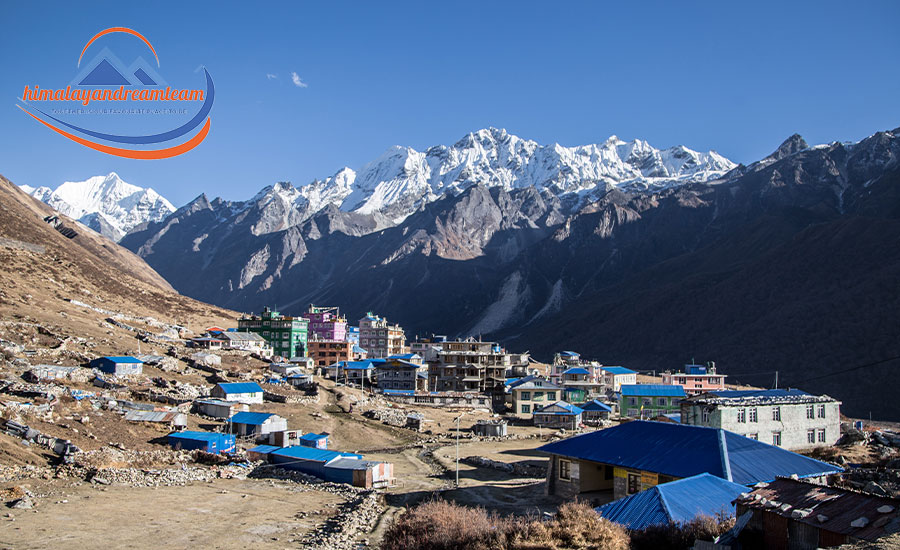
The trail then widens into a large valley filled with yak pastures and scattered Tamang villages, characterized by water-driven mills and prayer wheels. We continue to Langtang village at 3,500 meters, the administrative hub for Langtang National Park, where Tibetan-style flat-roofed houses are surrounded by fields of buckwheat, potatoes, wheat, turnips, and barley. This part of the trek is a vivid blend of natural scenery and cultural elements.

Food/Meals

Breakfast-Lunch- Dinner

Accommodation

Lodge

Max Elevation

3870 m.

We keep walking up, passing through small villages that are now empty and meadows along the way. From the wide Langtang valley, we can see the huge Himalayan mountains far away. Our path crosses a few small rivers and a rocky ridge from a glacier.

Finally, we reach what used to be the biggest village on our journey, called Kyanjin Gompa. It's named after the old monastery nearby, but most of the village is empty now because of the big earthquake in 2015. After lunch, we can choose to climb up to Kyajo Ri Viewpoint at 5,150m  for great views of the mountains and Langtang Valley.

Food/Meals

Breakfast-Lunch- Dinner

Accommodation

Lodge

Max Elevation

3870 m.

On this day, we'll remain at Kyanjin Gompa for acclimatization. The upper Langtang Valley offers incredible, up-close views of the tall mountains and glaciers. During our stay, we'll visit various sites, such as the Yak cheese factory and Kyanjin Gompa Monastery.

For those interested, there's an option to trek to Langshisha Kharka and the Tserko Ri (5450) viewpoint. From there, you can enjoy beautiful mountain views, including Langtang Lirung (7,227m), Langtang II (6,596m), and Yala Peak (5,500m). We'll return to Kyanjin Gompa in the evening.

Food/Meals

Breakfast-Lunch- Dinner

Accommodation

Lodge

Max Elevation

2748 m.

From Kyangjin, we take the route back to Lama Hotel. As we retrace our steps, we follow the Langtang Khola to Langtang village and on to Ghora Tabela. We stop briefly for lunch and thereafter continue the steep descent to Lama Hotel.

Food/Meals

Breakfast-Lunch- Dinner

Accommodation

Lodge

Max Elevation

1400 m.

Today, you will follow the same path back down to Syabrubesi, completing your trekking adventure. Upon arrival, take some time to rest and rejuvenate at the lodge. In the evening, you and your trekking crew can celebrate the successful completion of your journey in your own special way.

Food/Meals

Breakfast-Lunch

Accommodation

Hotel

Max Elevation

1335 m.

Today, after breakfast, we will drive back to Kathmandu.

Food/Meals

Breakfast

Max Elevation

0 m.

After breakfast or lunch, depending on your flight time, we will transfer you to the international airport or if you leave by evening you can put your luggage at the Hotel and enjoy the city one final day.

Services Included on Price

Service Includes

  • Arrival and transfer to and from the international and airport by private vehicle
  • Welcome dinner upon arrival in Kathmandu
  • Hotel accommodation with bed and breakfast in Kathmandu
  • 3 meals a day during trekking in Langtang and Helambu (Breakfast, Lunch and Dinner)
  • Government licensed trekking guide and porters during trekking
  • Langtang conservation fee and trekking permit (TIMS)

Service Excludes

  • Lunches and dinners in Kathmandu
  • International flight ticket
  • Personal insurance and helicopter rescue in case of emergency
  • Nepal visa fee USD 40 for 30 days and 4 passport sized pictures
  • Personal expenses and tips for staff All that is not mentioned in Include section

Altitude Graph

Frequently Asked Questions for Langtang Valley Trek - 10 Days

Culture

The Langtang Valley Trek is a scenic Himalayan journey in Nepal, known for its stunning landscapes, rich Tamang culture, and proximity to Kathmandu.
 

The Langtang Valley Trek offers a perfect blend of natural beauty, cultural immersion, and a less crowded trail, making it a hidden gem in Nepal.
 

Health & Safety

The Langtang Valley Trek is considered a moderate trek, making it suitable for beginners with basic fitness and some trekking preparation.
 

Altitude sickness can occur on the Langtang Valley Trek as it reaches up to 4,984m at Tserko Ri, so acclimatization and hydration are important.
 

General Information

The best time to do the Langtang Valley Trek is during the spring (March to May) and autumn (September to November) seasons for clear skies and pleasant weather.
 

A typical Langtang Valley Trek takes about 7 to 10 days, depending on your pace, acclimatization needs, and side trips.
 

The Langtang Valley Trek is generally safe for solo female travelers, especially when choosing reputable trekking agencies and considering female guides.

Packing for the Langtang Valley Trek should include layers of clothing, trekking boots, a sleeping bag, water purification, and first-aid essentials.
 

The highest point of the Langtang Valley Trek is Tserko Ri at 4,984 meters, offering breathtaking views of the Langtang Himalayan range.

The Langtang Valley Trek features rich biodiversity, including red pandas, langurs, Himalayan monals, rhododendron forests, and glacial rivers.

Permits & Logistics

Yes, for the Langtang Valley Trek, trekkers need a TIMS card and a Langtang National Park Entry Permit, both of which are easy to obtain in Kathmandu.
 

The Langtang Valley Trek can be done without a guide or porter, but hiring one enhances safety, local insight, and supports the local economy.

The Langtang Valley Trek begins from Syabrubesi, which is about a 7-8 hour drive from Kathmandu via public bus or private jeep.

Accommodation & Meals

During the Langtang Valley Trek, trekkers stay in teahouses offering basic but comfortable rooms, local meals, and a chance to interact with local families.

Payment & Cost

The cost of the Langtang Valley Trek ranges from USD 1000 to 1500 depending on duration, services, and whether you hire a guide or go independently.
 

Additional Information

The following details will help you understand what to pack for your trek. Remember, bringing the essential items is crucial for your comfort and safety during the journey. At the same time, it's important not to weigh yourself down with unnecessary gear.

EQUIPMENTDESCRIPTION
General
All season sleeping bag and down JacketProvided if needed, but must be returned after the trek
Duffle bagProvided during the trek but must be returned after the trek
Wind and waterproof thin layered jacketA must-have for mornings and evenings above 3,000m
DaypackEssential for carrying personal items during the trek
Upper Body - Head / Ears / Eyewear
A pair of half glovesUseful for walking poles
A warmer hat that covers the earsEssential for cold weather
SunglassesTo protect eyes from the sun and snow glare
NeckwarmerTo protect your neck from the cold
Sunscreen (35 to 60 SPF)To protect your skin from harmful UV rays
HeadlampImportant for early morning or late evening walks
Extra set of batteriesFor headlamp and other electronic devices
Hands
A pair of half glovesFor walking poles (if you prefer)
Warmer shell gloves and linerFor additional warmth and protection
Upper Body
Long sleeve t-shirtsFor layering and warmth
Thermal topsBase layer for warmth
Wool jacket or pulloverFor insulation and comfort
Sports bras (for women)For comfort during trekking
Water and windproof shell jacketTo protect from wind and rain
Lower Body
Thermal underwearEspecially trousers, for warmth
Windproof and waterproof trousersFor protection against the elements
Warmer trousersFor cold weather trekking
Comfortable trekking pantsFor ease of movement
Extra casual sport pantsFor relaxing after trekking
Footwear
Waterproof trekking bootsFor protection and comfort on rough terrain
Pair of sandalsFor relaxing at the end of the day
4-5 pairs of woolen socksFor warmth and comfort
Sock linersFor additional comfort and to prevent blisters
Light shoes and sneakersFor casual wear
First Aid Kits and Medicines
Assorted adhesive bandagesFabric preferred for durability
Blister treatment creamFor treating blisters
Insect / anti-itch ointmentFor insect bites and rashes
Ibuprofen or other pain-relief medicationFor managing pain and inflammation
Diamox (125mg to 250mg tablets)For altitude sickness
Warps, splints, and wound coveringsFor treating injuries
Water purifying pillsFor ensuring safe drinking water
NoteOur guide will carry the medicines and first aid kits during the trek. However, bringing your personal first-aid kit is recommended.
Miscellaneous (but must useful on the trek)
4 passport size photos with original passportEssential for permits and identification
Water bottle & filterFor staying hydrated
Flight detailsMake a copy and leave one at our office in KTM in case of flight changes
Bathroom kitInclude toilet paper, plastic bags, hand wipes, towel, and soap, etc.
Extra Things
Comfortable trekking polesFor support during trekking
Quality energy dry foodsOptional but useful for energy
Power bank and music playersFor entertainment and keeping devices charged
CameraMemory card, chargers, and extra batteries for capturing the journey

Best Time For Langtang Valley Trek:

Langtang Valley can be trekked throughout the year, although Spring (Mar-May) and Autumn (Sep-Nov) are the best periods when the views would be superb.

Spring (Mar-May):
Spring offers stable weather and pleasant temperatures, making it ideal for trekking. The trails come alive with blooming rhododendrons, adding to the beauty of Langtang Valley Trek.

Autumn (Sept-Nov):
This season is widely considered the most favorable season for trekking in Nepal, with pleasant temperatures and good weather. It also coincides with large Hindu festivals like Dashain and Tihar, adding a cultural touch to your journey.

Client Reviews

Book Now Inquiry

Similar Packages

Enjoy the popular trekking and tour packages in Nepal Himalayas. 2026.