
Upon arriving at Tribhuvan International Airport, a representative from Himalayan Dream Team will greet you and guide you to your hotel. Once you reach the hotel, you can check in, freshen up, and take some time to relax. In the evening, enjoy a welcome dinner hosted by Himalayan Dream Team. We will spend the night in Kathmandu
Start your day with a delightful breakfast at the hotel before embarking on a tour of Kathmandu’s UNESCO World Heritage Sites.
Swayambhunath (Monkey Temple): Our first stop is the ancient Swayambhunath Stupa, perched on a hilltop, offering breathtaking panoramic views of Kathmandu. This sacred site is a beautiful symbol of faith for both Buddhists and Hindus.
Pashupatinath Temple: Next, we visit Pashupatinath, Nepal’s most sacred Hindu temple and cremation site. Here, you can witness and photograph traditional Hindu rituals along the Bagmati River, immersing yourself in the local spiritual life.
Kathmandu Durbar Square: After a delicious lunch, we head to Kathmandu Durbar Square, a historic site showcasing stunning Newari architecture. Enjoy a photo session with locals in traditional attire or Hindu holy men (Sadhus), perfect for capturing unique and memorable portraits.
Vegetable and Spice Markets: End the day with a visit to the bustling vegetable and spice markets. Capture dynamic street photography of vibrant colors, energetic atmosphere, and diverse faces, providing a glimpse into everyday life in Kathmandu.
After breakfast, on our private vehicle, we drive to Dolakha. We get views of Sunkoshi and Bhote Khosi rivers en route. En route, we stop for lunch at a place called Mude and see picturesque villages and amazing mountain views continuing our drive to Chhetchhet 6/7hrs. Cross a suspension bridge and ascend into the forest and through the fields. Continue passing the Chorten to reach Simigaon, where Mt. Gaurishankar (7134m) rises over the valley. In the evening, explore the Buddhist Monastery and other areas.
Start your trail at Simigaon, which goes downwards through the green slopes, then climbs upward via stone stairs to achieve the Rolwaling River. The trail moves forward at the forests with amazing views of Gaurishankar (7,134m) and levels up to reach Dongang.
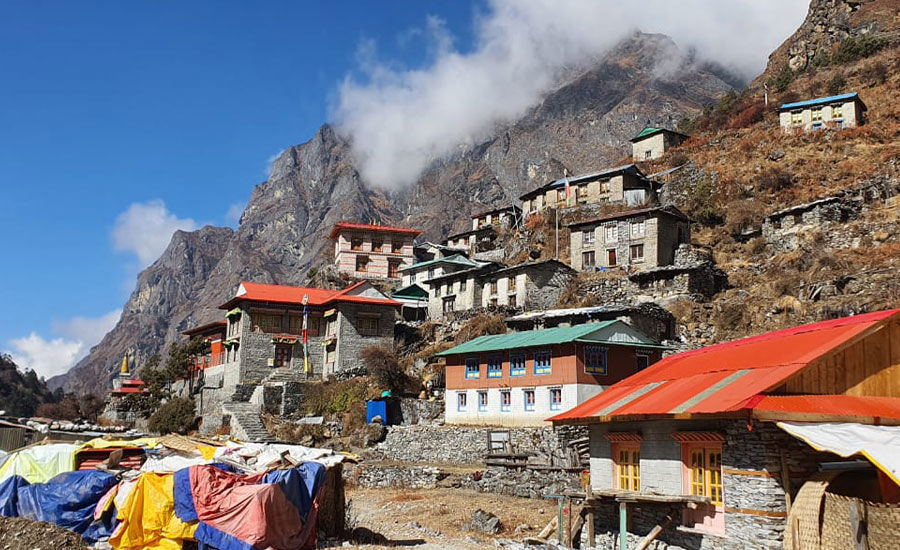
The trial today passes the forest along with ascents and descents until Nyamare village is reached. Lunch is taken here, along with some rest. After lunch, we walk to the most distant and largest settlement in the Rolwaling region: the Sherpa village of Beding. Relishing the view of the snow-capped mountains and waterfalls en route, we reach Beding. At the entry gate of the village, there exists an ancient Gompa.
Continue up the right bank of the Rolwaling River, heading into Dhogre and a wide U-shaped valley. Also, head towards fluttering prayer flags and Mani stones en route to Na Gaon, a village surrounded by big mountains
Finally, the day becomes so unforgettable and vital for the trek as we walk from Na Village to reach the well-known glacial Lake of Tsho Rolpa. Early morning, we leave Na Village and pass the bridge over Rolwaling River. We ascend uphill to see several kinds of edelweiss growing in the meadows. Walk between the two glaciers and then enter the valley, walking to Tsho Rolpa Lake. A walk on the moraines of Rolwaling Glacier takes us to the magnificent Tsho Rolpa Lake. Tsho Rolpa is the biggest glacial lake in Nepal. The astonishing natural beauty, over 4500 meters above sea level, will amuse the explorer inside you. The turquoise-colored lake is surrounded by bare hills and snow-capped mountains, and when they are reflected on the surface, it becomes an astonishing sight. We shall enjoy the serene moment, explore the lake, take amazing snaps, and treasure the moments spent around Tsho Rolpa Lake. Then, we walk back to Na Village.
After an unforgettable journey in the glacial lake of Tso Rolpa, we retrace our route back following the same track to Dongang. We start the walk to Beding following Rolwaling River. Once you reach Beding, you shall rest at leisure and explore the village. We descend through the forest with a view of Gaurishankar 7134m until reaching Dongang. During the trek, we walk through many up and down trails.
Continuing from the same route we had taken before climbing up the trail, after breakfast today, we pass by several up and down trails and many suspension bridges. We reach Chhetchhet, passing through some small villages.
We drive to Kathmandu after having a farewell breakfast with the Rolwaling area. We drive via the countryside road enjoying the view of surrounding hills, rivers, and villages. You will be taken to the hotel on arrival in Kathmandu.
Our adventure comes to an end today! Himalayan Dream Team accompany us to the airport for our flight time. Approximately 3 hours before your scheduled flight.
The best times to trek to Everest Base Camp are during the pre-monsoon season (March to May) and the post-monsoon season (late September to November). These periods offer clearer skies and more stable weather.
Essential items include warm clothing, waterproof jacket and pants, good quality hiking boots, sleeping bag, sunglasses, sunscreen, water purification tablets, and a first aid kit.
Accommodations are primarily in teahouses which provide basic lodging and meals. Rooms are typically shared with basic facilities.
On average, trekkers walk about 5 to 7 hours per day, depending on the stage of the trek and individual pace.
The risk is minimal. The region is home to wildlife like the Himalayan Tahr and various birds, but they generally keep their distance from trekking paths.
The trek usually takes about 12 to 14 days, starting from Lukla. This includes time for acclimatization stops to adjust to the high altitude.
A moderate to high level of fitness is required. The trek involves long days of walking, often on steep and rough terrain. Preparing with cardiovascular training and strength exercises is advisable.
Symptoms include headache, nausea, dizziness, and tiredness. Prevention involves acclimatizing properly by ascending slowly, staying hydrated, and possibly using altitude sickness medication under a doctor's advice.
Yes, most teahouses have Wi-Fi available for a charge. Mobile reception is available in many parts of the trek but can be unreliable as you gain altitude.
Yes, travel insurance that covers emergency evacuation and medical expenses at high altitudes is strongly recommended due to the remote nature and risks involved in the trek.
It is highly recommended to have a guide, especially for first-time trekkers. Guides offer valuable insights into the local culture, ensure safety, and help with route navigation and potential altitude sickness.
Yes, you will need a TIMS card (Trekker's Information Management System) and a Sagarmatha National Park permit. These can usually be arranged by your trekking company.
The cost can vary widely depending on the trekking agency, the length of the trek, included amenities, and whether you hire a private guide and porter. Expect to spend between $1,000 and $3,000.
Yes, most teahouses offer charging facilities for a small fee. However, it's a good idea to bring extra batteries or a solar charger, as electricity can be unreliable.
The teahouses offer a variety of meals, predominantly local Nepali food like dal bhat (rice and lentils) as well as some western dishes such as pasta and pizza.
No reviews yet. Traveled with us on this trip? Be the first to share your experience.
Enjoy the popular trekking and tour packages in Nepal Himalayas. 2026.

16 Days

20 Days

15 Days


7 Days

© 2011 - 2026 All rights reserved. Himalayan Dream Team